Tuesday, September 15, 2009

Time to Slip HIM a Mickey?


The age-old complaint women give about their male partner is that he, "Won't commit," "Doesn't cuddle enough," "Likes to spend time alone." You can add your own variation to this.

Now, a study of voles, provides new information and, yes, guidance, as how to handle your man.

Basically, he may need more vasopressin.

Tom Insel, a neuroscientist, has studied prairie and montane voles, and found that the two are 99% identical, but it is the 1% difference that, well, makes all the difference.

The montane vole is a sailor, coming into port to mate only to disappear into the swells of the mountain meadows. He may be a great lover, but he's an absent father and is, apparently, emotionally unavailable.

The prairie male vole, though, forms a very close pair bond with his mate, is a great dad (I guess this would mean protecting the little tykes from snakes, taking them with him as he goes to forage), and prefers the company of his mate to others (I guess you could take that to mean he'd rather hang around the nest than scamper through the tall grasses with his buds). He might be more like, well, an accountant.

So what do you do if you think your man tilts toward the montane and is less sedate and dependable than the accountant/meadow mole?

Easy! On a regular basis, offer to make him a drink and slip in some vasopressin. It's not hard to come by. Only a few drops on a regular basis should do the trick.

Surely this is easier than wearing uncomfortable underwear from Victoria Secrets!

Of course, you might wonder what HE is reading if he offers to make YOU a drink!

Mike Sledge

Tuesday, August 11, 2009

Op-Ed for the Shreveport Times, August 9 "Bone and Spirit"


August 9, 2009


Bone and Spirit


Editor's note: The Times asked Shreveporter Mike Sledge, author of a book on fallen servicemen and women, to offer his thoughts on the recovery of the remains of Navy Capt. Michael Scott Speicher.

The recent discovery of the remains of Capt. Michael Scott Speicher, the Navy pilot shot down in the Gulf War, brings again to mind the significant and poignant body-as-mind-soul-person association that is so commonly expressed, albeit in a manner that often eludes easy observation.

Indeed, President Barack Obama illustrated this conflation of body and person when he recently said, "I am grateful to the Marines who pursued the information that led to Capt. Speicher's recovery so that he can now come home [italics added]." If you didn't know the rest of the story, you wouldn't know the president was speaking about someone who had died.

We know, in our heads, that whatever mind or soul that constituted Capt. Speicher is separate and apart from the frail human vessel that contained his essence — his spirit, if you will — and that the same is true for the ones we love. Yet, despite any ontological argument tucked away behind our foreheads, we have difficulty fully accepting the distinction between the body and the soul of those close to us, and long after we receive definitive proof of death, our hearts still ache for the resolution that a final disposition of remains so frequently offers.

The seemingly insensible joining of body and soul by the survivors of those who have died is most apparent in cases when a body is not available for final disposition, as has often been the case of military deaths. In past wars, the return of the remains of our Soldier Dead ("Soldier Dead" is a phrase that originated during the Civil War given, in toto, to those who died in service of our country) was not a guaranteed event. Mexico City still hosts a cemetery containing the remains of 750 unknown dead from our war with that country.

During the Spanish-American War, the United States built upon its Civil War experience and strove to better improve the accounting and handling for the dead, but it was World War I that brought about an organization specifically dedicated to the recovery, identification and overseas burial of our dead. But, then there was the question: Do we leave our Soldier Dead overseas or bring them back?

Arguments for both alternatives were fierce, with former President Theodore Roosevelt deciding to leave his son, Quentin, buried in France. Interestingly, some argued for the return of the dead not because of patriotism, but because burying the dead would provide needed jobs. However, and again to illustrate the body-person association, a mother wrote to Secretary of State Robert Lansing, saying, "You took my son from me and sent him to war ... my son sacrificed his life to America's call, and now you must as a duty of yours bring my son back to me." (The mother insisted that her son be returned to her, not her son's body.)

This mother's letter settled all arguments, and afterwards (and after WWII), the next of kin made the final determination of burial site, with approximately two-thirds electing to bring the remains of their loved ones home while the rest were buried overseas in cemeteries such as the Normandy burial site so beautifully portrayed in "Saving Private Ryan."

During the Korean War, the United States began a concurrent return of Soldier Dead, which provided family members with much quicker final resolution than was available after WWI and WWII when the dead were not repatriated until nearly two years had passed after the cessation of hostilities. Now, members of our Armed Forces who give their lives are home in days.

However, there are still those missing from WWI, WWII, Korea and Vietnam — nearly 88,000 all total. We still mount missions to recover, identify and repatriate the remains of these missing, and those searching have, at times, paid a heavy price themselves, even the ultimate price.

Why? Why do we search so hard and so long for those we know surely to be dead?

And so we circle back to the beginning of this article, that of the association between body and soul, even when we know that the "remains" that are found are little more than bones. These bones are the ones we loved, and, like the Athenians who provided a public ceremony and burial for the remains of its fallen, we know we will find rest when those bones do.

Mike Sledge is a freelance author who resides in Shreveport. His book, "Soldier Dead: How We Recover, Identify, Bury, and Honor Our Military Fallen" was released in 2005. His Web site is www.mikesledge.com.

Tuesday, July 28, 2009

Why I Like Dark!

Recently, I was asked why I like "dark." As in dark humor, dark movies. I thought about how to articulate an answer, and realized that this was a feeling thing, not a thinking thing.

I've always liked dark. Robert Mitchum (Night of the Hunter, Cape Fear). More recently, Tarantino (Pulp Fiction).

The thing about dark is that it stands in such startling contrast to light. Well, duh! But, seriously, in light discernment comes with ease, while the dark holds more than is readily visible; you have to feel around, and touch things/thoughts without seeing them beforehand. Sometimes, you never know what you will come up with.

Dark has no easy answers, no platitudes, no gimmicky endings. Dark is thoughtful, dark is dangerous. Dark has a bottom that you can't see and try to feel with your feet, like swimming in a lake. And, like in a lake, you'll likely encounter hidden slimy things with your legs, and sometimes live moving things brush by with a cold touch and disappear.

In dark, good men are bad, and bad men are even badder; women can't be trusted, motives are suspect, and truth is variable.

In dark, creatures move about, looking for something to eat. Early hominids must have been terrified of the dark, knowing that the black veil beyond their campfires was filled with large teeth, sharp claws, and, worse, suckers of souls.

Yet, to venture into the carbon black is to embrace your fears, to know that even thought justice is relative, there is such a thing as right and wrong, and even the good-with-parts-of-bad man or woman will try to swim up to the light one more time...sometimes for personal salvation, sometimes to save others, but always for redemption.

I guess I like dark because I believe in the devil (though certainly not the fallen angel of traditional biblical schools), and the devil lives in the blackness that is always pulled away in a dark story or movie, if only for a little, and we see bad for what it is, and good for what it tries to be.

Mike S.

Saturday, July 25, 2009

Help! I Live In a Neighborhood of Flags!

Flags have been used for centuries to send signals. Those signals can be quite literal, such as the handheld semaphore signal system, the nautical flag system, or the various pennants used to make an ostentatious announcement to the world of your favorite LOSER sports team.

A quick research of nautical flags, turns up some very interesting signaling messages, with each flag standing for a specific letter of the alphabet and carrying a specific meaning. For instance, This flag,


stands for "W - Whiskey" and means, "I need medical assistance." (Gotta love that pairing of letter and meaning.)

Now, THIS flag,


stands for "Z - Zulu" and means, "I need a tug." (One would guess that a person hiring an in-house masseuse from Craig's List displays this one on the front of his house.)

Which brings me to the point of this post: Many of my neighbors have flags flying near their front door. There's this one:


OK, I get it. Ants! Watermelon. Hey, whaddya know, it's summer!

Then, this one,


Ah, how cute! Ladybugs are ALWAYS cute. I think the guy that owns this house must be cute, too.

Then, there is the flag I HATE TO SEE, whether it be from a car, motorcycle, or flapping and yapping by the front eaves!


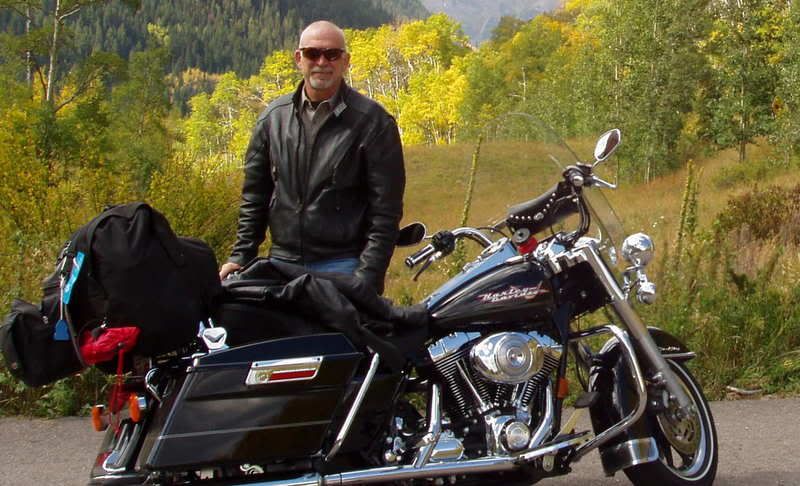
But, my neighborhood is an older, well-established neighborhood. Most of its inhabitants are members of long-term marriages, and many are retired couples. There's nary an untended lawn, and very few empty BudLight cans thrown about at night. And, then, there's ME! I'm single. I have dogs that bark. My flowerbed needs work. I ride a Harley. Here's MY flag!


Mike Sledge

Monday, July 13, 2009

In the Beginning, God May Have Created Man, BUT

Home Depot and Lowe's created woman to increase their sales...especially paint products. And, they gave her the ability to withhold her favors so that Man would paint!

But, knowing that a man might consider no sex preferable to spending a weekend day with a brush in hand, they also created the roller and the sprayer!

Mike Sledge

Sunday, July 12, 2009

Sneaking a Peek at His/Her Kindle!

When first considering spending time with another person in a dating situation, we all have ways of making an initial assessment of future possibilities. For instance, when I lived in Boulder, CO, many women would put something like this in their on-line profiles: "If you even THOUGHT about voting Republican (Bush, especially), don't even THINK about contacting me."

But, once over the initial meeting or two and we've ascertained that we won't be arguing over the Stimulus Package and a real date ensues, what other clues are there to use?

For me, when I pick the lady up at her house, my eyes can't help but search her bookcases. If they are full of Nora Roberts or Clancy, then she'd better be really sexy and have a great body. If they have some Camus, Saramago, Updike, McCarthy, or other notable writers, then my mind is definitely involved.

But, now, with Kindle becoming every more popular (I love my Kindle DX), what's a single, avid reader to do? I can't just say, "Hey, honey, I'd like to see your Kindle!" Or, "I'll show you my Kindle if you show me yours!" Or, "Would you like to synch our Kindles?"

Now, I really can't give the woman's perspective on judging a date ahead of time. I mean, I've heard women say, "If he has a job and isn't in jail, he's a good prospect," and I wouldn't be able to comment if a woman cared what a man's Kindle looked like, but I would imagine a full Kindle might be a good sign, maybe especially the newer and bigger model.

Perhaps Amazon (the seller of Kindle), can offer its OWN date site, where you can search for possibilities by books downloaded? Oh, yeah, then I know I'll have a lot of luck. Some of my recent downloads are: Sex, Time, and Power, Beowulf, The Epic of Gilgamesh, books sure to really bring 'em in. (Ironically, there is ONE woman I know who would LOVE my choices: my EX-WIFE!)

Mike Sledge

Monday, July 06, 2009

ENZYTE: I'm in the WRONG Business!


When I first saw the ENZYTE ads on TV, I thought it was a spoof; surely something making such a blatant and transparent attempt to appeal to a man's self-picture of sexual prowess was a joke, right? But, then again, we all know ads, some much more subtle than others, directed toward a man's "tool" and have always worked.


But, seriously, have you seen the Smiling Bob on the ads? He looks like a total nerd and his smile is more fake than those superglued to the faces of Miss America pageant participants. He looks like a total loser!!

Smiling Bob zooms by his friends, who take notice of his blowing by them with downcast faces that have a shadow of envy. Hell, even his WIFE has a big smile on her face! (The Enzyte website says: "Women may not say it to your face, but they all want a larger, harder man.")

I guess "Jenny" would agree. (Jenny is the girlfriend of "Mike," who is 36, and who "didn't want to feel like he was 'past his prime.'" Jenny says that "She's glad he uses Enzyte, and she wouldn't want it any other way.")

But Enzyte's performance kick isn't relegated just to white sheets in the bedroom, because Smiling Bob is shown standing before a board of directors with a big chart showing a big "up tick" in...sales?; his tumunescence?

Indeed, the Enzyte website says, "The proprietary formula of Enzyte can help maximize a man's erection potential. While there is no known ingestible proven to alter the natural size or shape of the penis, Enzyte can help your body achieve the fullest, strongest erections it is physically capable of achieving."

Ultimately, though, you have to recognize that, like romance novels, this ad works. Heck, who DOESN'T want a fuller, harder, more sustainable erection? And, how can it fail? After all, it does contain Horny Goat weed!

Mike Sledge